When do you need a FRAEW? A practical guide for building owners
Project leads
Contributors

Robin Holme
Robin is Director in charge of the Leeds office, bringing experience in project management and monitoring, contract administration, technical due diligence, building pathology and party wall surveying. He also has a keen interest in developing sustainability opportunities across his projects and services.
He has recent experience acting as programme director for high rise cladding remediation works for a leading national student accommodation provider and having completed the RICS EWS1 Assessor course, has enhanced understanding and competence in cladding consultancy. He has led and developed building and project consultancy teams nationally while working in the Leeds marketplace for over 20 years.
Robin’s experience includes new build, refurbishment and fit-out projects as well as managing survey programmes regionally and nationally. His work covers commercial property sectors including industrial, retail, residential, education and healthcare, for clients such as British Land, Patrizia, Land Securities, Quadrant Estates, Walgreens-Boots Alliance, CO-OP, Aberdeen and the Department for Transport.

Priyanka Ganatra
Priyanka is an experienced Façade Engineer with over a decade of expertise in the design, consultancy, and performance analysis of external wall systems across the commercial, residential, and mixed‑use sectors. With a background as a trained architect and Master’s degree in Building Technology, she offers a rare combination of creative design thinking and deep technical acumen.
Her experience spans the full project life cycle, from early‑stage design through to on‑site construction monitoring. Her collaborative approach and proven track record in stakeholder engagement make her a trusted advisor in multidisciplinary project environments. Priyanka brings technical rigour, attention to detail, and a strong commitment.
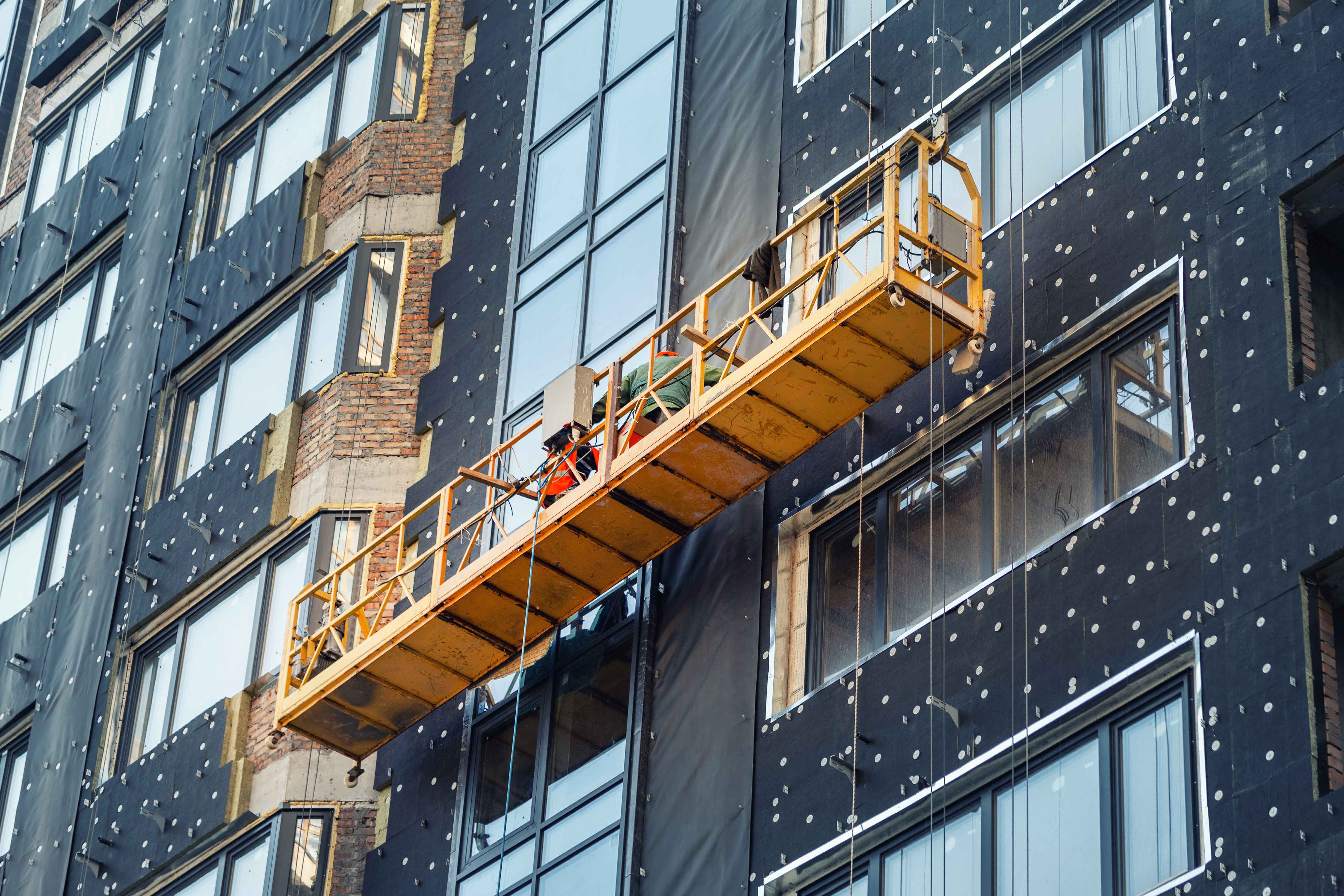
A Fire Risk Appraisal of External Walls, or FRAEW, is a detailed assessment of the fire risk associated with a building’s external wall construction. This guide explains when property owners need to obtain one and why, as part of our wider series of advice articles on delivering safer buildings.
All multi-occupied residential buildings with two or more sets of domestic premises need their Fire Risk Assessment to consider the external walls. But that doesn’t mean every building needs a separate FRAEW. In many cases, a competent fire risk assessor can establish through the routine Fire Risk Assessment that the risk of external fire spread is sufficiently low. Government guidance on FRAEWs explains when a more detailed appraisal is likely to be needed.
A more detailed external wall assessment is more likely to be appropriate where there is a known or suspected risk associated with the way the wall has been constructed, including the presence of combustible materials.
When might you need a FRAEW?
One of the most common triggers is a recommendation in the building’s Fire Risk Assessment.
A routine Fire Risk Assessment looks at fire safety across the building. If the assessor identifies concerns around the external walls that need more detailed investigation, they may recommend a FRAEW.
That could be because there are questions around the materials used, the construction of the façade, combustible insulation or other elements that could affect the risk of fire spreading externally.
TFT also sees these appraisals recommended through technical due diligence. When reviewing an existing building for an acquisition or sale, for example, our team may identify something in the as-built information or during a site inspection that warrants a closer look at the external walls.
“If we identify something unusual that could affect fire spread or fire safety, that’s when we would recommend a FRAEW.” – Priyanka Ganatra, Facade Engineer, TFT
Some building owners also choose to commission the appraisal proactively because they want greater certainty about the external wall construction and the level of risk it presents.
Does every residential building need a FRAEW?
In short, no. The Fire Safety Act 2021 clarified that, for multi-occupied residential buildings, the structure and external walls fall within the scope of the Fire Safety Order and need to be considered as part of the building’s Fire Risk Assessment. But a detailed external wall appraisal isn’t automatically required.
Current government guidance says that in many cases the level of risk will be clear enough for a competent fire risk assessor to deal with the external walls as part of the routine Fire Risk Assessment. Brick or masonry external walls with a sufficiently low risk of fire spread are given as an example.
A FRAEW becomes more relevant where the construction is more complex, combustible materials are known or suspected to be present, or there simply isn’t enough reliable information to understand the risk properly.
What happens during a FRAEW?
The process will usually start with a review of the information available about the building and its external wall construction.
That can include pre-existing drawings, specifications and records. The assessor may then visit the building and carry out further investigations to establish what has actually been installed.
In many cases, that means opening up sections of the external wall to confirm the wall construction and materials used, inspect different wall types and look at the quality of the installation. The extent of the investigation will depend on the building and how much reliable information is already available.
The findings are then used to assess the fire risk associated with the external wall and set out any action that may be needed.
Where PAS 9980:2026 is used, it provides the methodology for carrying out and recording the appraisal. We cover that methodology separately in our guide to PAS 9980, so we won’t repeat it here.
Why does the quality of the assessment matter?
This type of assessment requires professional judgement, so it’s not a one-size-fits-all approach. As such, the quality of the investigation and the expertise behind it are important considerations.
Our team has reviewed reports produced by a range of organisations and has seen significant variation in the approach taken. One of the risks is relying too heavily on assumptions about how the external wall has been built, without carrying out enough investigation to confirm.
Fire safety knowledge is important, but so is an understanding of façade engineering. The assessor needs to be able to interpret what has actually been designed and installed, not simply what the available documents suggest should be there.
“A professional carrying out the assessment should have knowledge of fire engineering as well as façade engineering.” – Robin Holme, Director, TFT
The government’s technical guidance for FRAEWs also emphasises the need for appropriately competent professionals and for the report to be clear about the information relied on and any intrusive investigations carried out.
What can the assessment tell you?
The report should help establish the level of fire risk associated with the external wall construction and what, if anything, needs to happen next.
That doesn’t always mean removing and replacing the entire façade.
The appropriate response depends on the specific risks identified. A building may have several different wall or cladding types, and the assessment may identify that only certain areas or components need work.
For example, recommendations could relate to a particular type of cladding, combustible insulation, missing cavity barriers or fire stopping. The response should be site-specific.
“There is no fixed formula for every property. It depends on the building and the risks identified.” – Priyanka Ganatra, Facade Engineer, TFT
This risk-based approach can help owners focus remediation on the areas that genuinely need attention, rather than assuming that every external wall system requires the same response.
What happens if remediation is recommended?
If the assessment identifies a risk that needs to be addressed, the next step is to understand exactly what work is required and how it will be delivered.
This can mean developing a remediation strategy, establishing budget and programme requirements and bringing together the right team of fire engineers, façade specialists, designers and contractors. Depending on the building and the proposed works, regulatory approvals may also need to be factored into the programme.
The detail is important at this stage; our aim is to respond to the risks identified without losing sight of cost, disruption and what is practically achievable.
For larger or more complex remediation projects, keeping the relevant specialists involved throughout the process can also help maintain continuity between the original assessment, the design response and what is eventually installed on site.
Do you still need a FRAEW if you have an EWS1 form?
An EWS1 form and a FRAEW serve different purposes. The RICS EWS1 form is used to provide valuers and lenders with a standard way of recording an expert assessment of an external wall system for valuation purposes. It is not a life safety certificate.
A FRAEW assesses the fire risk posed by the external wall construction and is intended to inform the building’s wider Fire Risk Assessment. The two can be connected, and the findings of the appraisal may inform an EWS1, but they shouldn’t be treated as interchangeable.
Could a FRAEW be necessary for any commercial building?
PAS 9980 and FRAEWs are primarily associated with existing multi-storey multi-occupied residential buildings, including those operated as commercial residential assets. The TFT team has also seen similar principles used to assess external wall fire risk on other types of property where owners or advisers want a better understanding of the façade.
Whether that is the appropriate route depends on the building and the reason for the assessment, so it is worth taking professional advice before commissioning one.
Do you need a FRAEW?
A FRAEW may be appropriate if:
• Your Fire Risk Assessment recommends a more detailed assessment of the external walls
• Combustible materials are known or suspected to be present in the external wall construction
• There are gaps or uncertainties in the information available about the wall build-up
• Concerns are identified during technical due diligence or a building inspection
• You’re applying to a remediation funding scheme that requires one
Before commissioning further work, start with the evidence you already have. Review the current Fire Risk Assessment and the available drawings, specifications and records for the external walls.
If those documents identify a concern, or leave important questions unanswered, a FRAEW may be the best way to proceed.
For owners applying to the Building Safety Fund, the current process requires an FRAEW based on PAS 9980:2026 as part of the application.
In safe hands with TFT
TFT helps commercial building owners, investors and project teams understand fire safety requirements and bring the right technical expertise together at the right stage of a project.
Whether you’re planning works to an existing building, reviewing a potential acquisition or trying to understand the implications of changing guidance, we can help you establish the right approach and coordinate the next steps.
If you want to keep up to date with changes in legislation and regulation, technical challenges and new ways of working to achieve building safety, click here to join our In Safe Hands mailing list for monthly insights and advice from the team.
Talk to our building safety specialists
TFT can help you review the available information, understand where further investigation may be needed and bring together the right technical expertise to decide the right next steps.
Related sector
Related services

Related content




We make buildings work better

